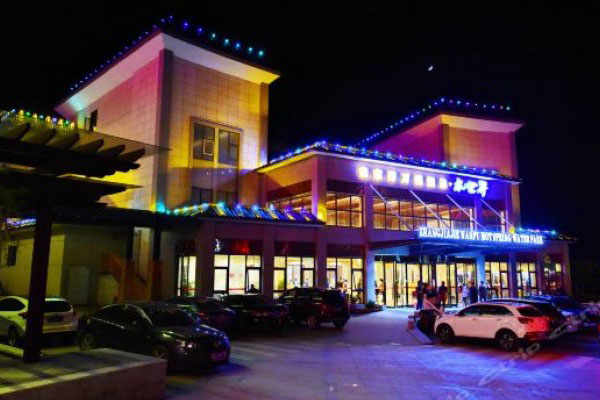
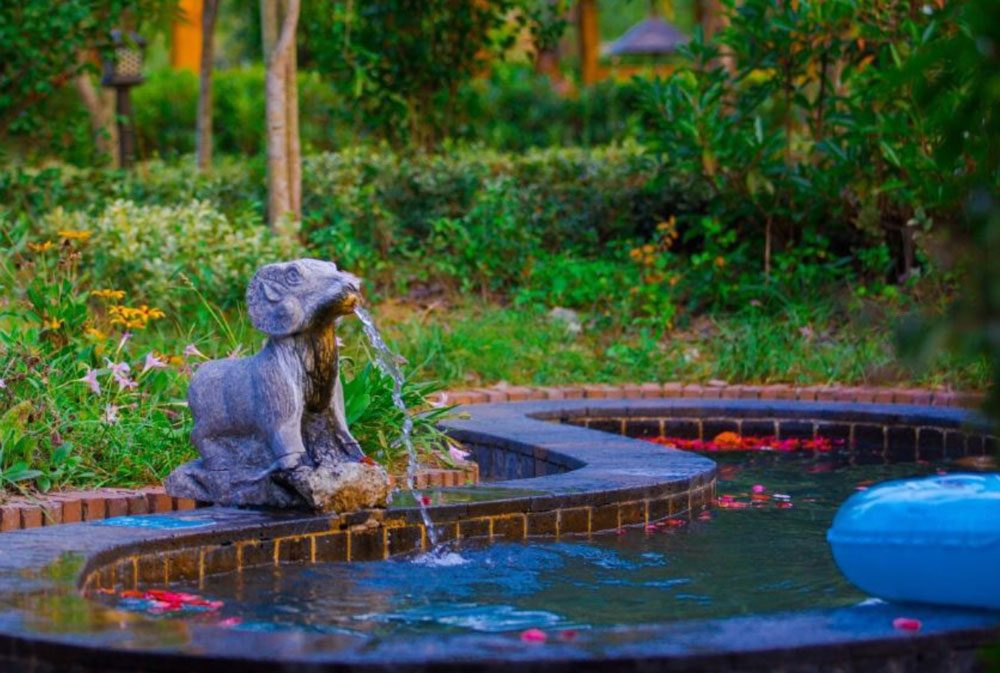
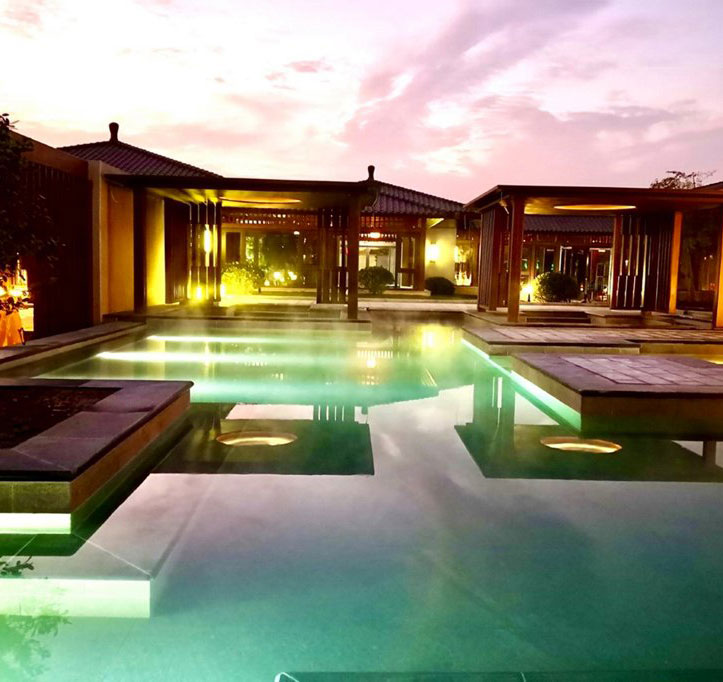
It have rich resources of hotspring in Zhangjiajie and can be developed more than 20 places. Now the developed hotsprings , like Jiangya hotspring and Wanfu hotspring , there are more than 20 types characteristic services. You can bath in hotspring after sightseeing the wonderful mountains and enjoy your journey.
02. Health Preservation Tour in West Yunnan
Route Features
Tengchong Volcano and Geothermal Spring known as the “geothermal museum” is the top choice for a health preservation tour. Drive along the Burma Road to visit scenic spots and historical sites along the Southern Silk Road, the scenery at both banks of the Ruili River and Daying Rive in Dehong, experience folklores of the Dai, Jingpo and De’ang Ethnic Groups , inspect the largest jewelry trading market in China, and have fun from looking for good things at a bargain price. The route also leads to Myanmar and India.
Scenic Spots On The Way
Tengchong: the Old Town of Heshun, Tengchong Volcano and Geothermal Spring, Beihai Wetland, Jiangdong Gingko Village, Banglazhang Hot Spring; Dehong: Mengbanaxi Ecological Garden, One Village in Two Countries in Ruili, Yingjiang Kaibangya Lake.
Food
Jinji pocket-shaped tofu, Tengchong fried rice cake slices in soup, Heshun Deep Fried Rice Cake and Egg, Sour Ants and Raw Pigskin, Preserved Bone, Local Hot Pot, Fire Roasted Pork, Chicken in Pot, Sapie seasoning, Ants Egg, Jingpo Cold Lemon Chicken, Eco-Friendly Green Leaf Banquet, pestled dish, Paoluda
Hotel
Banyan Tree Tengchong Address: Mayugu Hot Spring Town, Beihai Township
Ruili Jing Cheng Earthsea SPA Holiday Center Address: Eastern Section of Ruili Street
Shopping
Baoshan Yongzi (go chess pieces produced in Baoshan), Southern red agate, Tengchong jade, Longling Huanglong chalcedony, Baoshan little mung bean, Dehong Arabica coffee, Mangshi dendrobe, Zhefang rice, Lianghe cucurbit flute (Brand commodities available in Ruili port duty-free store)
Gansu is both the home to the Chinese civilization and a sacred place for worshipping ancestors. Tianshui is the birthplace of the Emperor Fuxi, the first of the three legendary “kings”, Longxi considered home to all the people bearing the family name Li (or Lee), Kongtong Mountain at Pingliang the holy land where Taorism originates, Qingyang the birthplace of t he Chinese agricultural civilization, and Lixian of Longnan a cradle of Pre-Qin culture. Winter is the best season for health preservation and physiotherapy. Local foods are characterized with heath preservation and good for eating in winter.
The “delicacies” are contributive to promotion of tourism. Five cities in the southeastern Gansu are important production bases of traditional Chinese medicine (TCM) and the first National Innovation Area for TCM-based Health Preservation. Heath preservation banquets are available, such as Guangcheng Immortal Banquet, the Taoists’ Health Banquet, and the Cereals Banquet. Blessed with geothermal resources, Tianshui, Dingxi, and Pingliang have become the tourist destinations for SPA in Western China.
04. Hot springs & Spas in Hainan Island
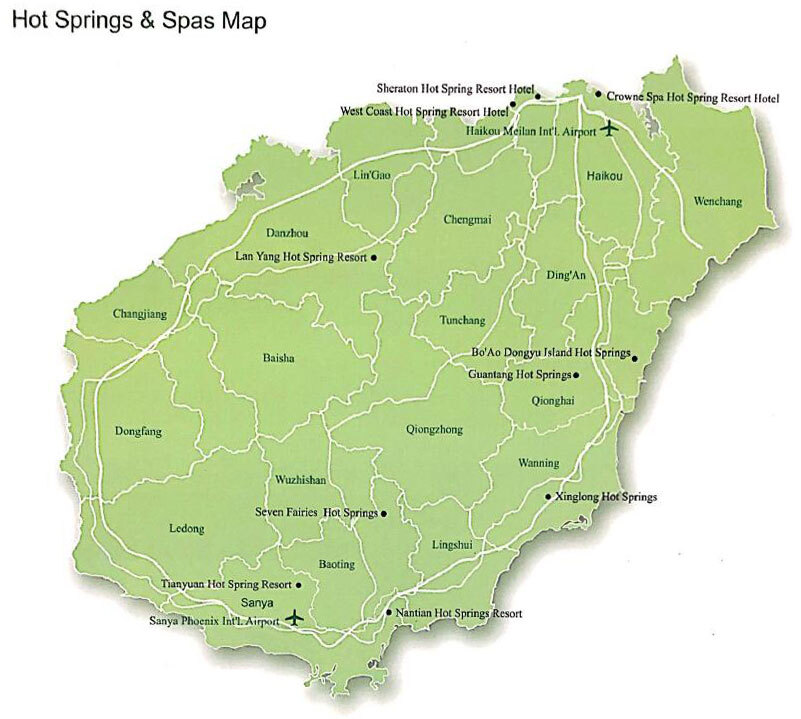
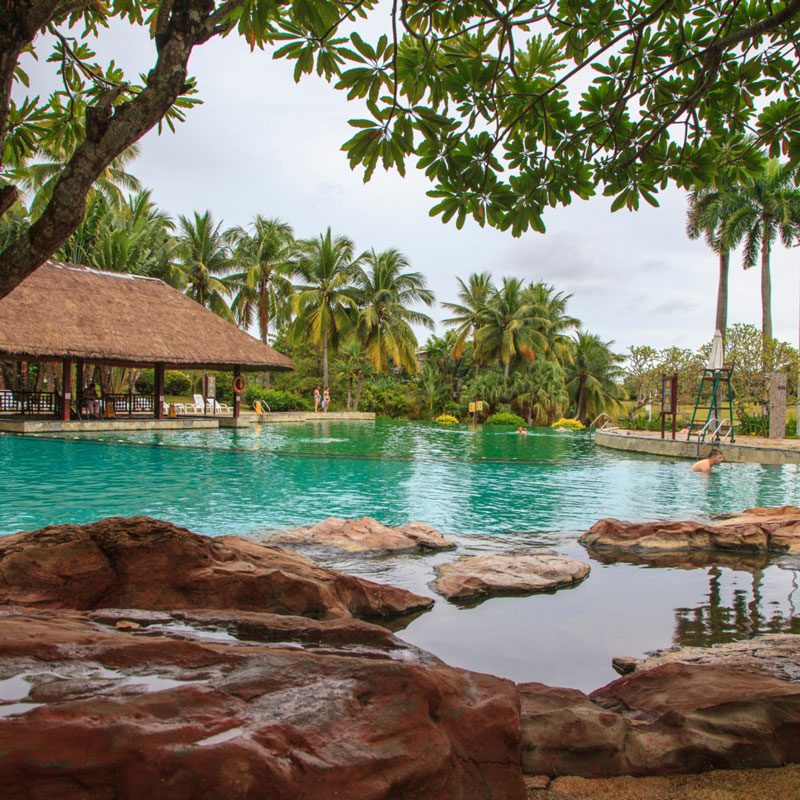
Hot springs are formed by the interaction of magma inside the Earth’s crust with naturally occurring springs. Because of its location on the edge of the Asia Pacific “Ring of Fire” Hainan has an abundance of naturally occurring hot springs. These are one of the island’s largest tourist attractions. Located in places ranging from mountainside to seaside there are over 34 different naturally occurring hot spring sites that have been already been discovered on Hainan Island. The five most famous hot springs located in. Hainan are the Guantang Hot Springs in Qinghai, the hot springs at the Xinglong Overseas Chinese Farm in Wanning County, the Seven Fairies Ridge Hot Springs in Baoting Li and Miao Minority Autonomous County, Nantian on the outskirt of Sanya, and Lanyang in Danzhou.
Hainan’s hot springs are special for their high mineral concentration and therapeutic values. Hainan is also different from other areas of China in that there are both so many hot springs in such a small area and so many different types.
Quantity There are over 34 different natural hot spring areas identified on Hainan Island.
Distribution Hainan Island has a higher concentration of hot springs than any other place in China. Located primarily in the southeast and northwestern parts of the island springs can be found in southern Wenchang County, eastern Qionghai County, southern Lingshui County, southern Sanya County, eastern Danzhou County, southern Chengmai County, western Dongfang County, the central part of Changjiang County, and western Baisha County.
Types Bicarbonate springs, sulfur springs, mineral springs, naturally radioactive springs, low temperature springs, high temperature springs, and fresh water springs
Hot Spring Therapy is useful for the treatment of Rheumatoid arthritis, herniated discs, skin conditions, neurological conditions, hypertension, coronary heart disease, chronic arthritis, and neuralgia…
05. Discover Hubei
Wenquan (the hot spring) is located in Xianning City, which lying in the east of Hubei Province. It has abundant geothermal resources and the average water temperature is around 50℃. Besides it also got a saying “12 hot spring in a city”. Besides enjoying the hot springs, it is also a good choice to experience mountain biking and fruit picking.
Santelangkou Hot Spring Resort
Lying in the private hot spring of the Chinese courtyard, you can enjoying listening the birds singing and the shining stars, which is suitable for family tour.
There are 4 springs, with a daily water output of 4,000 tons and an average water temperature of 45℃.
Address: Langkou Health and Leisure Resort, Chongyang County, Xianning City Price: a villa for 3500-12800 yuan I night
Luotian Sanlifan Hot Spring
In Hubei, Sanlifan Hot Spring has the highest water temperature and is suitable for health care. The resort is located in the northeastern part of Wuhan. There are fewer tourists and it takes an hour from Huanggang city by highway.
Address: Hot Spring Village, Sanlitun Town, Luotian County, Huanggang City Price : 198 yuan / person
06. Huadu Hot Spring Holiday Resort in Henan
Some 10 km east of Xuchang on the northern side of No. 311 national highway, it is a multi functional holiday resort integrating health building, sightseeing, leisure, holiday and business meetings. Legend has it that the spring water in the holiday resort was found by Hua Tuo, a sage of medicine, when practicing medicine in Xuchang. Over 100 hot sprints are tucked away in the woods and flowers. The holiday resort contains luxury and ordinary villas, hot springs in the forests, a meeting center, an educative toy center for adults, an amusement center on water, a garden for exotic flowers and rare grasses, a catering culture center, etc. Transport: Take a bus at the Xuchang East Railway Station to the holiday resort.
Jun porcelain wares, which shows the rare, high quality and unusual Jun porcelain wares; and the Jun art workshop, where tourists can watch the whole production process of Jun porcelain, and make porcelain wares with the help of skilled workers. Transport: Take a bus to the suburbs at the Xu chang West Railway Station.
07. Zhacang Hot Springs in Qinghai
The spa in Guide County, 125 kilometers from downtown Xining , covers an area of 1,800 square meters. The water temperature of its 27 springs is as high 93 degrees Celsius. The spring water, rich in silicic acid, metaboric acid, fluorine, lithium, strontium, radium and other microelements , is of considerable medical value. People have been taking baths in the spring water to treat dis eases since the early Ming Dynasty more than 600 years ago.
Transport: The spa is 10 kilometers from the county seat of Guide. One can get there by bus from the Xining Long-distance Bus Station to Guide County.
08. Tibetan Medicine Museum of China in Qinghai
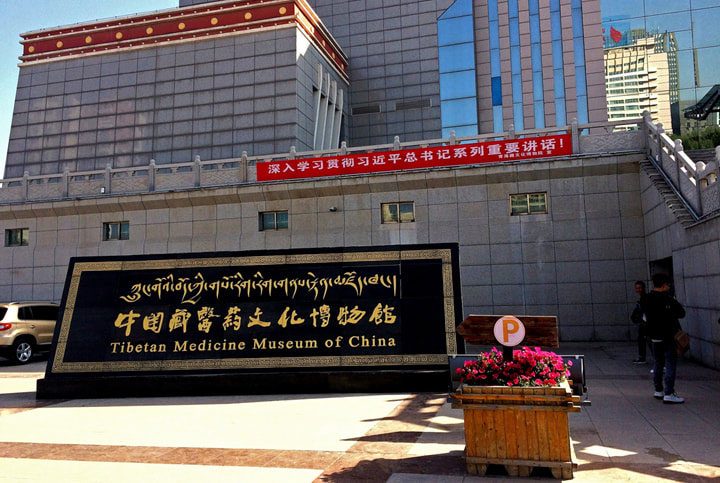
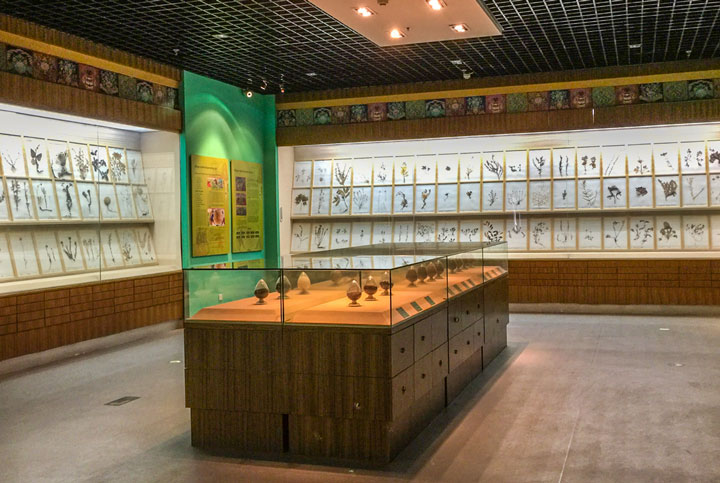
The Tibetan Medicine Museum of China is located at 36 Jing’erlu Road in the Bioscience Park, Xining. It is a national AAAA tourist attraction , the first Tibetan medicine museum in the world and the only museum exclusively devoted to Tibetan culture in China. Its functions are to protect, do research on and serve as a showcase of Tibetan medicine, Tibetan folk customs and Tibetan Buddhism. “The Panorama of Tibetan Colored Paintings,” which is reputed as an encyclopedic drawing of Tibetan culture and arts, is the most valuable exhibit in the museum. It took Tangka painting master Zongzhe Lajie 27 years to conceive the work and more than 400 leading Tibetan, Mongolian, Han and Tu artists from Tibet, Gansu, Sichuan and Yunnan four years to finish it. Transport: One can take bus No. 34 to the Bioscience Park (Shengwuyuan).