

With unsurpassed natural beauty and a basin that’s home to one third of China’s population, you can bet a cruise down the Yangtze is going to be one to remember
If ever there was a reason to step aboard a cruise ship, it would be to discover the Yangtze. But while cruising’s popularity has rocketed among Australians, there are still some who can’t quite bring themselves to book a cruise due to its stigma of being more for those of the “senior” persuasion. And yet, a river cruise along Chang Jiang (to give the Yangtze its Mandarin title, meaning Long River) is the perfect way to get up close and personal with a country while never compromising on creature comforts. These opulent vessels couldn’t be further removed from the floating “theme parks” that grace ocean cruising playgrounds. With a maximum of around 300 passengers, they afford the opportunity to enjoy spectacular landscapes and ancient towns as passengers revel in a tranquility seemingly lost in the bustle of modern life. Nowhere does river cruising come into its own more than on the mighty Yangtze in China. The Yangtze is the third longest river in the world after the Nile and the Amazon. A meandering 5,686 kilometres long, it rises on Mount Geladaindong in the Tibetan Plateau and disgorges into the Yellow Sea at Shanghai. This vital waterway traverses the heart of China, but it’s the upper reaches that are the popular cruising playgrounds for the variety of sumptuous vessels that have opened up this mysterious river to a worldwide audience of inquisitive travellers.
Recommended Route
Hubei — Chongqing
Must-see Along The Route
01. Hubei Province
With a population of 60.85 million, Hubei Province is situated in the middle reach of the Yangtze River and covers area of 190,000 square kilometers. On this vast and rich land of “Province of A Thousand Lakes” and ,“Land of Fish and Rice” live in harmony diligent people of different ethnic groups for generations and generations, unfolding a colorful array of folklore pictures.
Charmingly sheer and respectively distinctive are Qutang Gorge, Wuxia Gorge and Xiling Gorge, the Three Gorges of the Yangtze River. Taking a downstream cruise on the river, you were as though strolling in a “Landscape Gallery”, absorbed by waterfalls, springs in green ranges, the singing of birds and the screaming of monkeys. It becomes a hot destination with the completion of the Three Gorges Dam Project in 2009.
Shennongjia, one of the primeval forests and nature reserves in China, is veiled by its mystery: the mysterious legend of “wild man” and leading-nowhere streams. The Wudang Mountain is one of the four famous “Taoist mountains in China. Its complex of ancient structures was built in Zhenguan Period (627-649) of the lang Dynasty and expanded in a large scale in the Ming Dynasty (1368-1644) in the manner of royal constructions of the Palace Museum in Beijing, both taking on a regal bearing. It has been included in the World Heritage List.
Over 1,800 years ago this land time and again witnessed fierce battles among the Three Kingdoms of Wei (220-265), Shu (221-263) and Wu (220-280), which left more than 50 historical remains. Standing on the historical sites of the ancient Chi Bi battlefield, the ancient Jingzhou City, the Yellow Crane lower, the ancient Guanling Tomb, the ancient capital of Wu State and ancient Longzhong, one cannot help recalling the bygone days and indulging in a welling of myriads of sentiments.
The hospitable people open their arms to home-and-abroad friends in their shared enjoyment of fantastic scenes of the Three Gorges, Shennongjia, the Wudang Mountain, the Three Kingdoms relics and Wuhan.
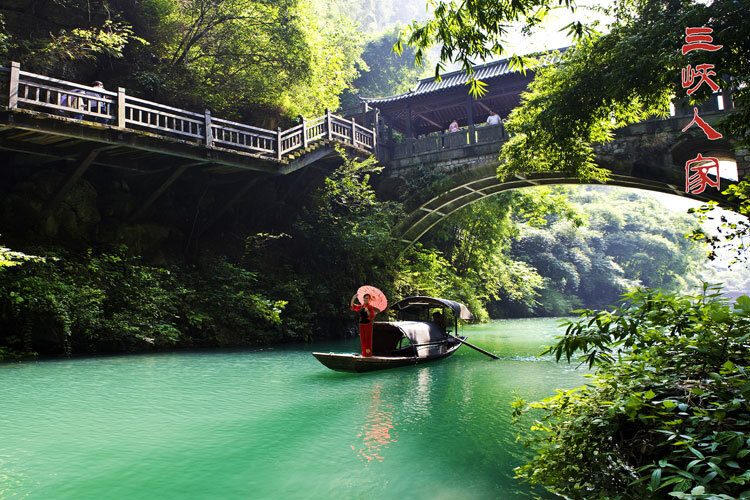
- Three Gorges of the Yangtze River
Early risers the next day stand on the sundeck in silent awe as their river cruisers traverse the first of the legendary Three Gorges created by the Yangtze, forcing its way through a spectacular barrier of limestone ridges. Immediately downstream of the ancient village Baidicheng, the Yangtze passes between Chijia Mountain on the north andBaiyan Mountain on the south. It’s this point that is known as Kuimen Gate and the entrance to Qutang Gorge.
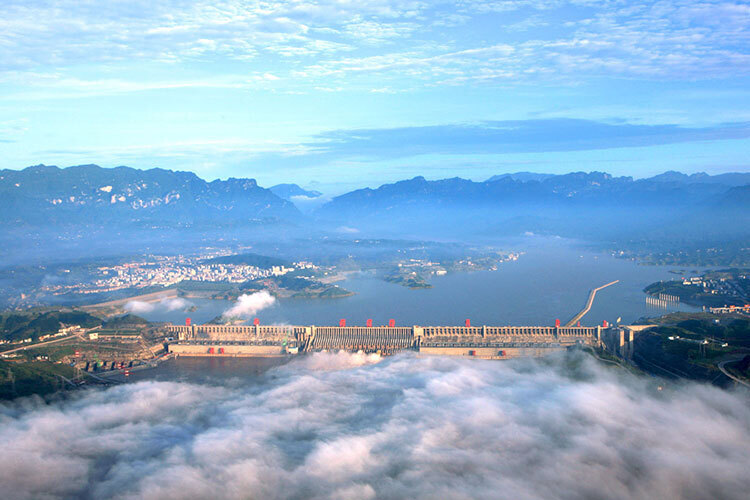
- Three Gorges Dam
It covers an area of 15.28 square kilometers. Up to now five spots has been opened to the tourists. Standing on the Tanzi Ridge you can have a bird’s eye view of the whole of the Three Gorges Dam project. At Jieliuyuan (Damming Park) you can watch the spectacular scene of the damming of the Yangtze River, a hundred-year old dream of the Chinese people.
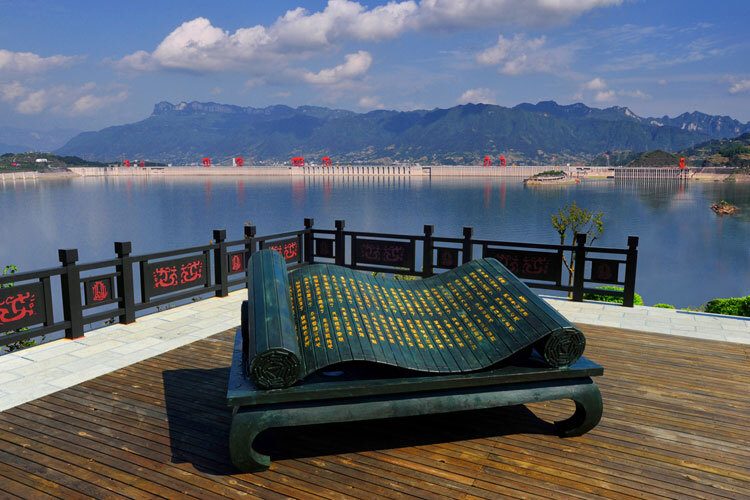
- Qu Yuan Memorial Hall
It is the birth place of the great poet Qu Yuan (340B.C. – 278B.C) of the Warring States Period (480B.C. – 221B.C.). Located to the northeast of Zigui County, Yichang Qu Yuan Temples built in the Ming (1368-1644) and Qing (1616-1911) times respectively have fallen, into ruin. The present one was reconstructed in 1988 in the style of civilian dwellings of the Qing Dynasty. In it there are an original statue of Qu Yuan and seven stone tablets since Qianlong (1736-1795) reign of the Qing Dynasty. Other relics include his homestead, a study cave, Lepingli Archway and so on.
Xiling Gorge
The Yellow Crane Tower
Yichang Chexi Scenic Area
Tea Garden
Bean Curd
02. Chongqing
Chongqing is located in Midwest China, on the upper reaches of the Yangtze River, and has an area of 82,400 km² and a population of 33 million. It has a history of more than 3,000 years. It is the largest municipality in China and is a vital link between the “Belt and Road and the Yangtze River Economic Belt. With a landscape that features mountains, rivers, and gorges, Chongqing is the largest three-dimensional city in the world, and is known as the “city of mountain”, the “city of rivers” and the “city that never sleeps.”
Chongqing is an international metropolis on the golden waterway of the Yangtze River that is open to the world, The Chongqing-Xinjiaag-Europe Railway and the regular sea-and-rail transit route that links China and Singapore. It has established economic and trade relations with more than 180 countries and regions, sister relations with 43 cities around the world. Nearly 300 companies on the Fortune Global 500 have operations here. More than 140 domestic and international airlines operate here, including 71 international airlines. The 72-hour transit visa policy has been implemented for 51 countries and regions including the United States, Gennany, France, Russia, and Switzerland.
Chongqing has unique and rich tourism resources, a magical natural landscape, colorful folk customs, deep humanistic charm, and beautiful Bayu style. It is the world’s “city of hot spring” assessed by the World Federation of Hydrotherapy and Climatotherapy. Chongqing features more than 230 Class-A scenic spots, including eight 5A-scenic spots and 27 luxury cruise ships. It has been rated as the “World’s Top 10 Travel Destmations” and the “World’s Top 10 of the Most Potential Travel Destinations” by the authoritative travel magazine Frommer’s and Lonely Planet many times. In 2017, the World Travel & Tourism Council released a report that ranks Chongqing No. 1 of the top ten fastest-growing tourism cities in the world.
This is a land of natural beauty, a city with cultural appeal. You are welcome to Chongqing – Journey to New Accomplishments!
- Dazu Rock Carvings
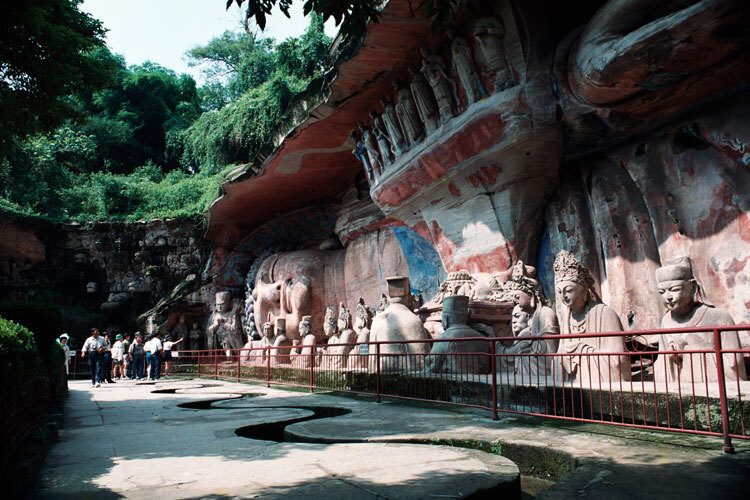
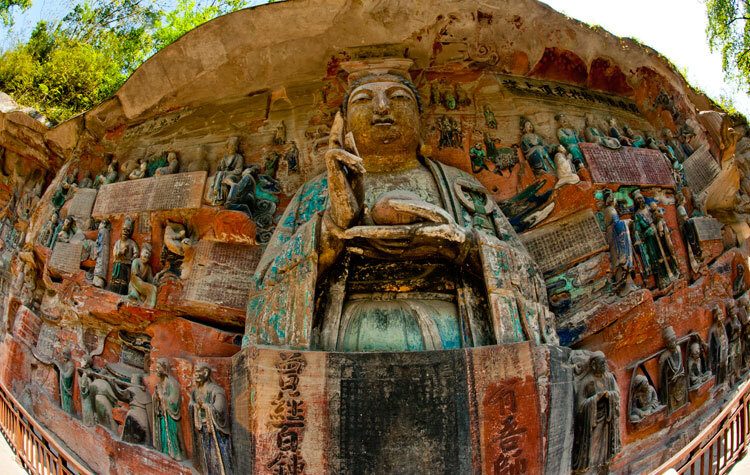
A 5A-rated scenic area in Dazu District, it was built in the transitional period of Tang and Song Dynasty, using a form called Moya Carving, which means to carve directly into the natural cliffs. The carvings were made to publicize and show respect to their God.
- Sichuan Opera Changing Face
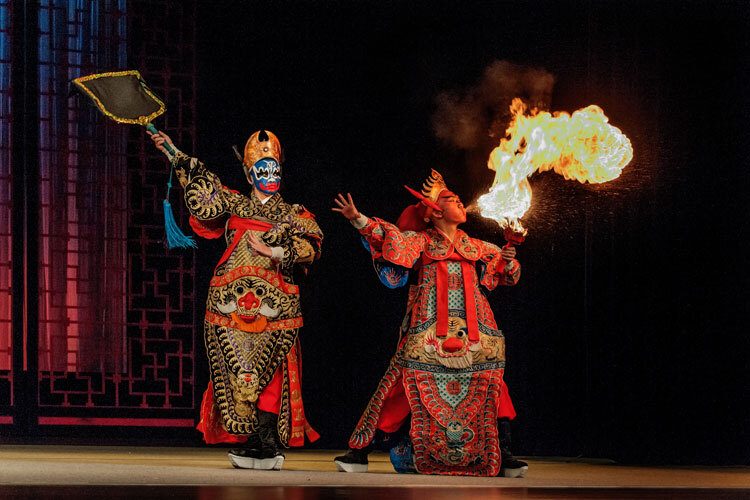
Chongqing is a “city that never sleeps”, which brings to mind the fantastic and wonderful nightlife.
- Baidicheng (White Emperor City)
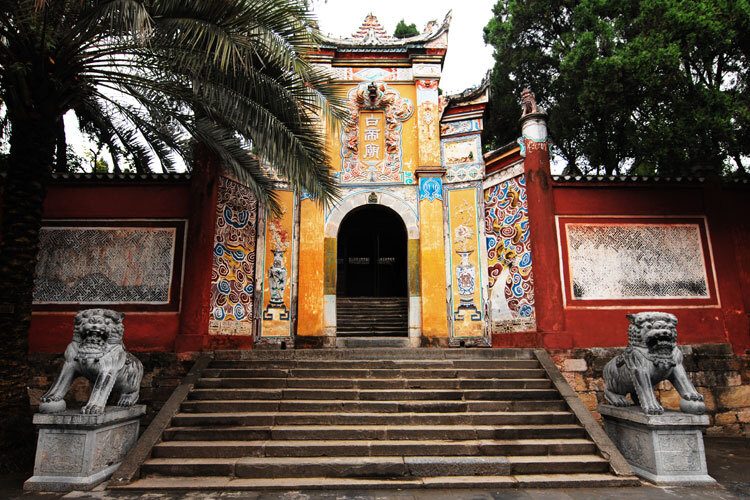
Baidicheng is an ancient temple complex on a hill on the northern shore of the Yangtze River in China. It has been said that the area was once surrounded with a white mist, giving it a look which was rather mysterious, yet serene—much as what an emperor should be like.